
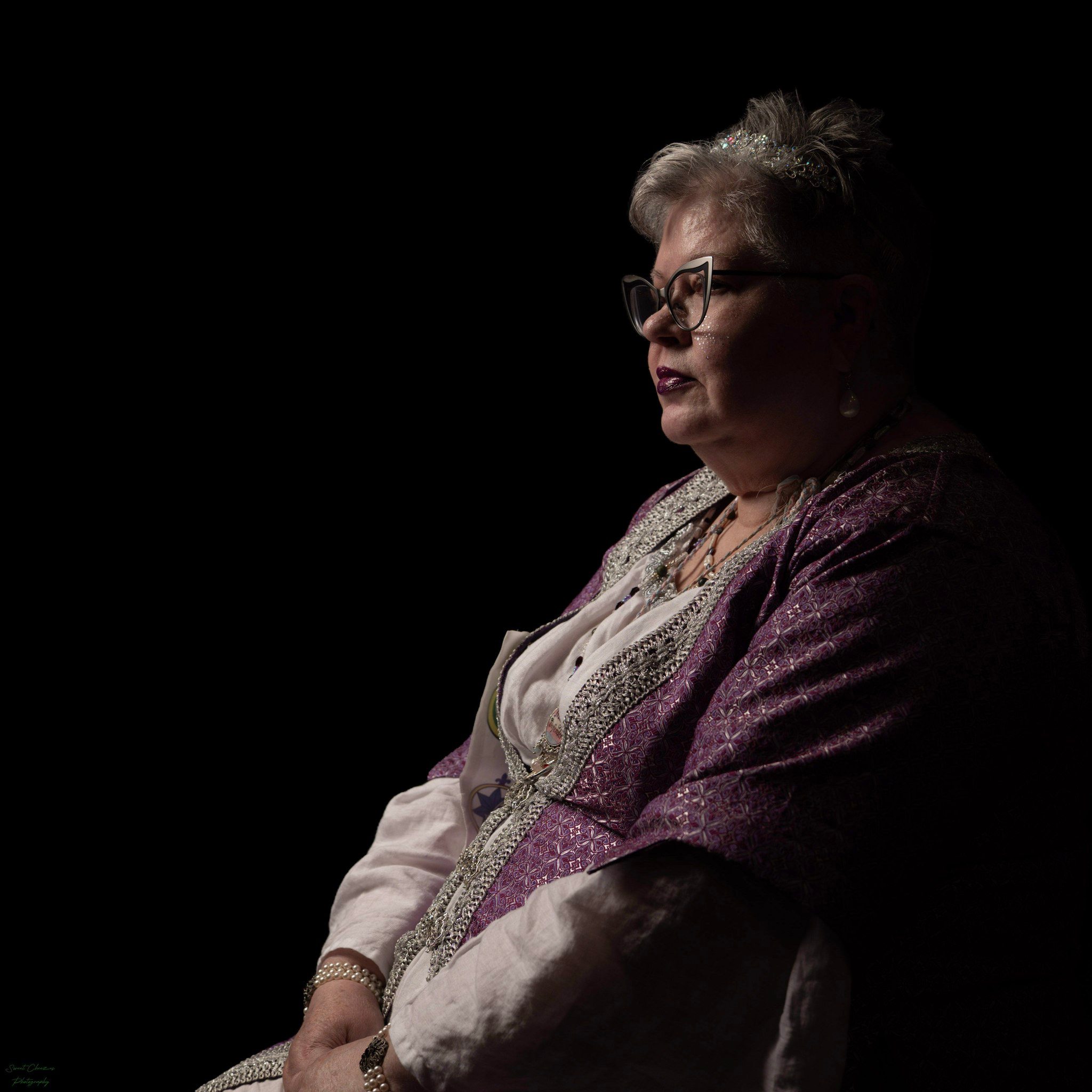
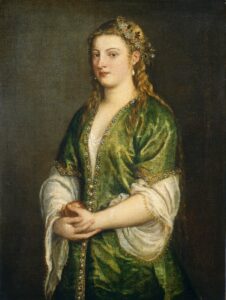
Babs requested a Turkish Italian Gown inspired by portraits such as Woman Holding An Apple by Titian. I used the slide decks made by Mistress Aenor de Pessac of An Tir for directions on the patterning and construction thereof.
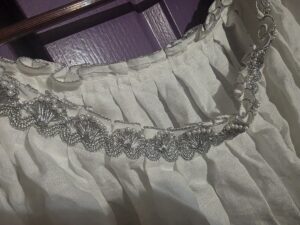
The body linen used for this ensemble was not period correct for the time and place. The body linen is more appropriate to the 1490s in Venice. It was almost 100% hand-sewn, with the exception of one line of machine stitching anchoring the pleated neckline to the neckband. Everything else was hand-sewn. It was constructed with Optic White linen at a 3.7 oz weight from Fabric-Store.com.
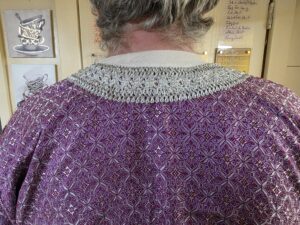
The neckline trim was a stash trim that was metallic silver and faux pearls. The pleated edge of the neckline has a 1 mm silver lurex cord whipped to the edge.
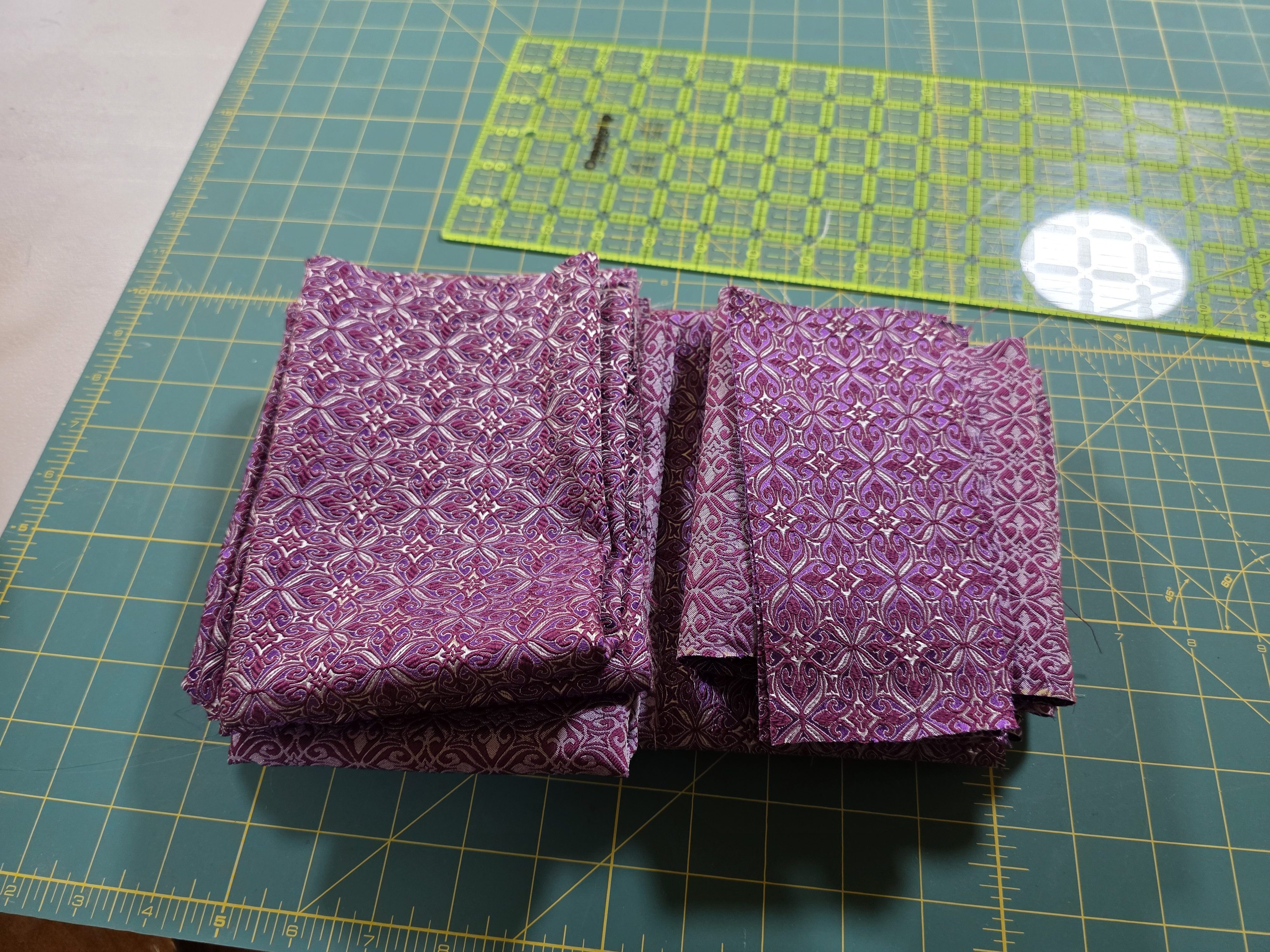
The fabric for the main gown was a Sartor Bohemia brocade called Noble brocade in the colorway burgundy, silver, and violet. The trim for this was another metallic silver trim from my stash, and the clasps were an Etsy find by Babs.
The pattern is all rectangular and trapezoidal construction. The side gores are assembled, each from 2 pairs of mirror-image trapezoids. The size of all the pieces is determined by your measurements and some mathematical formulas that Aenor nicely shared with us in her slide decks. However, that does not save you from making a mistake of using the wrong number (shoulder PLUS ease instead of just shoulder) to base your calculations on! So my first attempt at the gore assembly was WAY too small. As can be seen with the first attempt in the center and then the final attempt on the right.
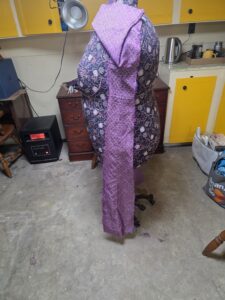
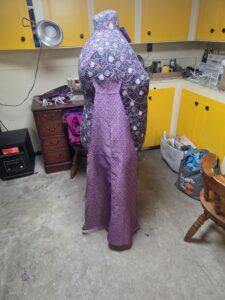
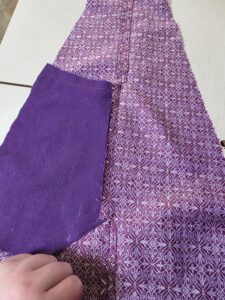
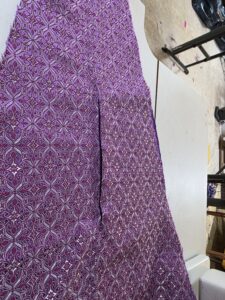
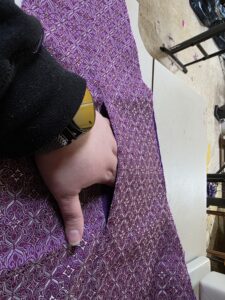
However, this mistake ended up being good because I was asked to add pockets after the first gore assembly was made, and I realized they were too small. With the need to make a second, larger gore assembly, I was able to add pockets. I started by sewing my pockets with a ⅜ inch seam allowance to each side of the gore. I then assembled the gore using my standard ⅝ inch seam allowance. I finished my seams by turning each side of the seam allowance under and hand sewing them down and the edges of the pocket by pinking.
Once fully assembled, I cut the neckline. I used bias tape to bind the neckline. Then I added the trim and hand-sewed it to the outside. At the neckline, I eased the trim around the neck and added multiple additional rows of hand-sewing in the neck area to help prevent bubbles and ripples in the trim.
Once the trim was put on, I used bias tape to bind the bottom hem.
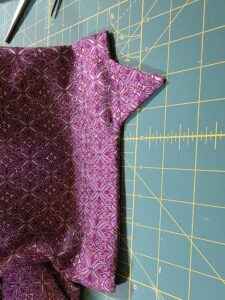
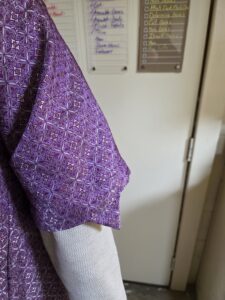
Finally, the sleeves needed to be finished with the points on the sleeve cuffs like the inspiration image has. I used facings on the sleeves to accomplish these points. At An Tir 12th Night, when the finished garment was handed off, I added the clasps at the desired locations.
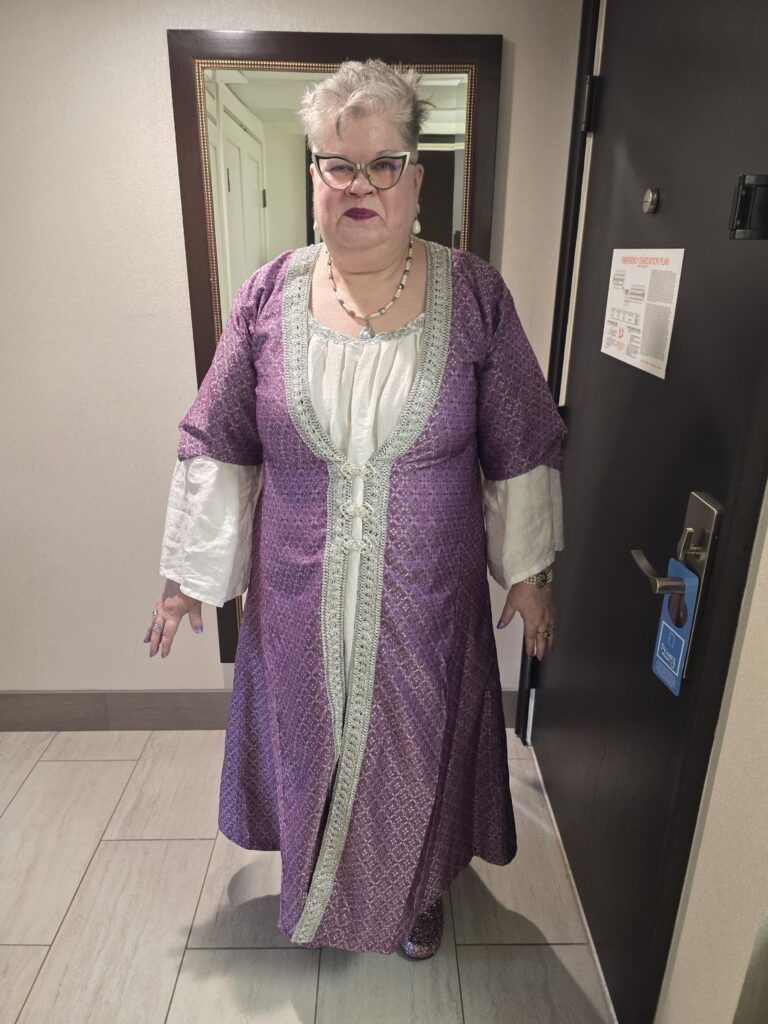
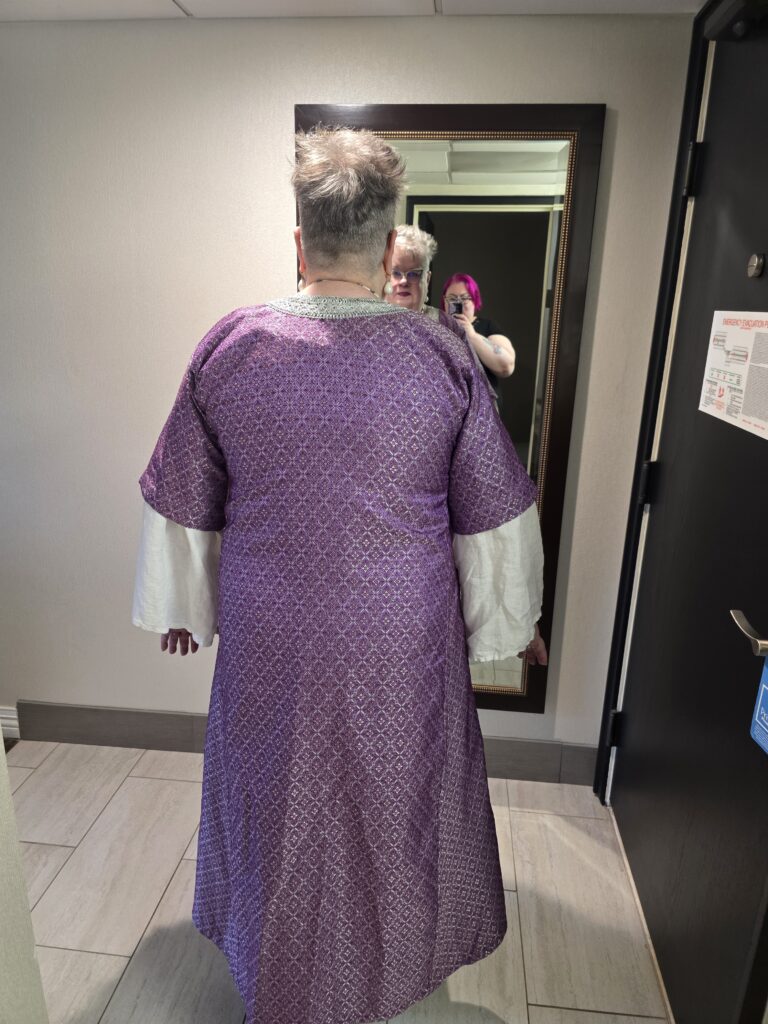
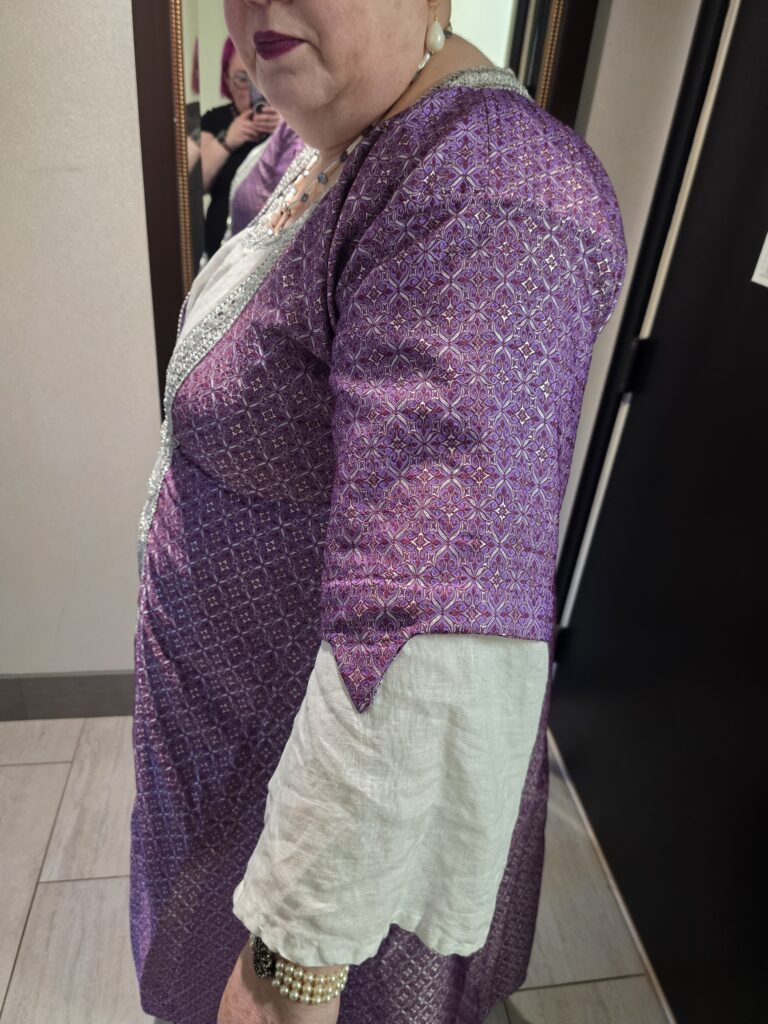
I am thrilled with the finished product! Thank you sooooo much, Mike! 😍